Mittwoch, 18. Mai 2011

Fasching


Germany's version of Mardi Gras in the US, or also known as, Carnival in Munich. It is a holiday celebrated in the Catholic regions of Germany. It's a day people get off from work and dress up in silly costumes and go in town to see the parade and merely drink and celebrate the holiday!


Carnival is a festive season which occurs immediately before Lent; the main events are usually during February. Carnival typically involves a public celebration or parade combining some elements of a circus, mask and public street party. People often dress up or masquerade during the celebrations, which mark an overturning of daily life.


Carnival is a festival traditionally held in Roman Catholic and, to a lesser extent, Eastern Orthodox societies.Protestant areas usually do not have carnival celebrations or have modified traditions, such as the Danish Carnival or other Shrove Tuesday events. The Brazilian Carnaval is one of the best-known celebrations today, but many cities and regions worldwide celebrate with large, popular, and days-long events. The Carnival of Rio de Janeiro is the biggest carnival in the world, and the biggest popular party on the planet, according to The Guinness Book of World Records 2010. The Rio de Janeiro Carnival is also considered the world's most famous.

Giampaolo di Cocco (2007) Alle origini del Carnevale: Mysteria isiaci e miti cattolici (Florence: Pontecorboli)

Samstag, 14. Mai 2011

Heidelberger Schloss


The Scholoss is easily the main attraction here in Heidelberg. When you walk back from class on the old bridge, you have to stop to admire the most breath-taking view of the castle. It is inevitable that you will find yourself gazing at the castle during class, no matter how hard you try to focus. The most impressive part is that the Heidelberg Scholoss was built before AD 1214, and most of it is still standing today!
Beginning of our journey up to the castle
House along the way up

After climbing up 300 stairs!


Mittwoch, 4. Mai 2011

Neckarwiese

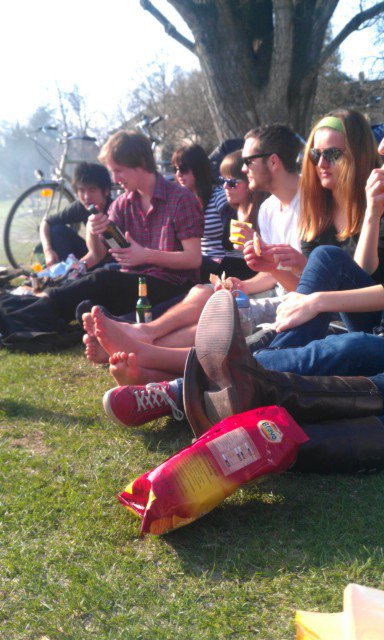
Since Heidelberg is the warmest city in Germany.. the Neckar is definitely the biggest attraction here. Everyone goes here after class.. in between classes.. whenever they can! It's paradise on Earth, laying out in the sun surrounded by the most scenic landscape, grilling, playing sports etc.  
The Rhein and the Neckar are two separate rivers that extend throughout Germany and meet in Mannheim. "Rhein-Neckar Metropolitic Region" is also referred to as the Rhein-Neckar Triangle, located in South Western Germany, between Frankfurt/Rhine-Main region to the North and the Stuttgart Region to the South-East.
For students: rent a paddle boat/kayak and get a scenic tour of the Neckar
If you are willing to spend more: Go on a dinner cruise along the Neckar... getting the full experience of the old city.


Donnerstag, 28. April 2011

Max-Weber Haus

A major pro of the Baden-Wurttemberg exchange program is the mandatory intensive language course that takes place before the semester starts. It was a great way to meet other students from all over the world and make some of the closest friends. Taking this language course helped ease the stress of culture shock and other stress I had. It gave me time to expose myself to the area and the culture before the semester began, it was a nice transition for everyone. 
Max-Weber Haus

Magnificent View From Class!


Biking

In addition to public transportation, biking is definitely the main source of transportation. EVERYONE bikes here.. it's easy, convenient, and quick! A typical day would consist of going to the Neckarweise after class to soak up the sun, meet up with friends, grill.. grab an ice cream cone. The buses are great but they run every 10 minutes and every 20 minutes on weekends and holidays, it's better to not have to worry about missing the last bus.. therefore, having a bike is super handy. There are plenty of bike shops around to buy either new or second hand bikes for 50-80euro (depending on how much you are willing to spend).